Something has gone wrong in the arts.
Not at the margins, not in isolated incidents — structurally, in the way decisions are made about who gets to create, perform, exhibit, publish and be heard. An ecology once built on talent, artistic judgement, meritocracy and creative risk has been displaced by a different dynamic: fear, informal sanctions, quiet cancellations, the normalisation of silence, the avoidance of due process.
We call this the new boycott crisis — not because every act of exclusion is a formal "boycott," but because boycott logic has become the organising principle around which a much larger ecosystem of coercive practice has formed.
How it operates
The pattern across cases is consistent.
The same four mechanisms turn up wherever institutions fold under pressure — and they fold the same way each time.
-
Anticipatory compliance
Pre-emptive cancellation, driven by fear of what might happen — rather than response to anything that has. The dominant pattern; the named effect of every other mechanism in this list.
-
Pressure from inside
Force originates within the organisation, not outside it. Staff complaints, advisory bodies, partner networks. Audience boycotts are rare; the building cancels itself.
-
Safeguarding language
Political objections converted into welfare or HR processes designed for genuinely unsafe situations — and ill-equipped to distinguish a real concern from a political objection in welfare clothing.
-
Silent boycott
Opportunities drying up, invitations ceasing, communications going unanswered. No formal explanation; no documentation. Doors quietly closing rather than letters arriving.
The research
We have documented our analysis in two reports.
Afraid to Speak Freely.
Drawing on testimony from 483 artists and arts professionals, we exposed a growing climate of fear, censorship, and ideological conformity in UK arts institutions. We identified a chilling effect that disproportionately silences emerging or marginal voices — and found many no longer able to speak openly without risking career damage, exclusion or harassment.
Read the report ↗The New Boycott Crisis.
A 40-page study of the system producing that effect — drawing on 194 sector workers, 45 in-depth interviews, and a senior leaders' roundtable. We document how boycott pressure operates in practice, how decisions are made under constraint and what is lost when fear replaces process.
Read the report →
Westminster · April 2026
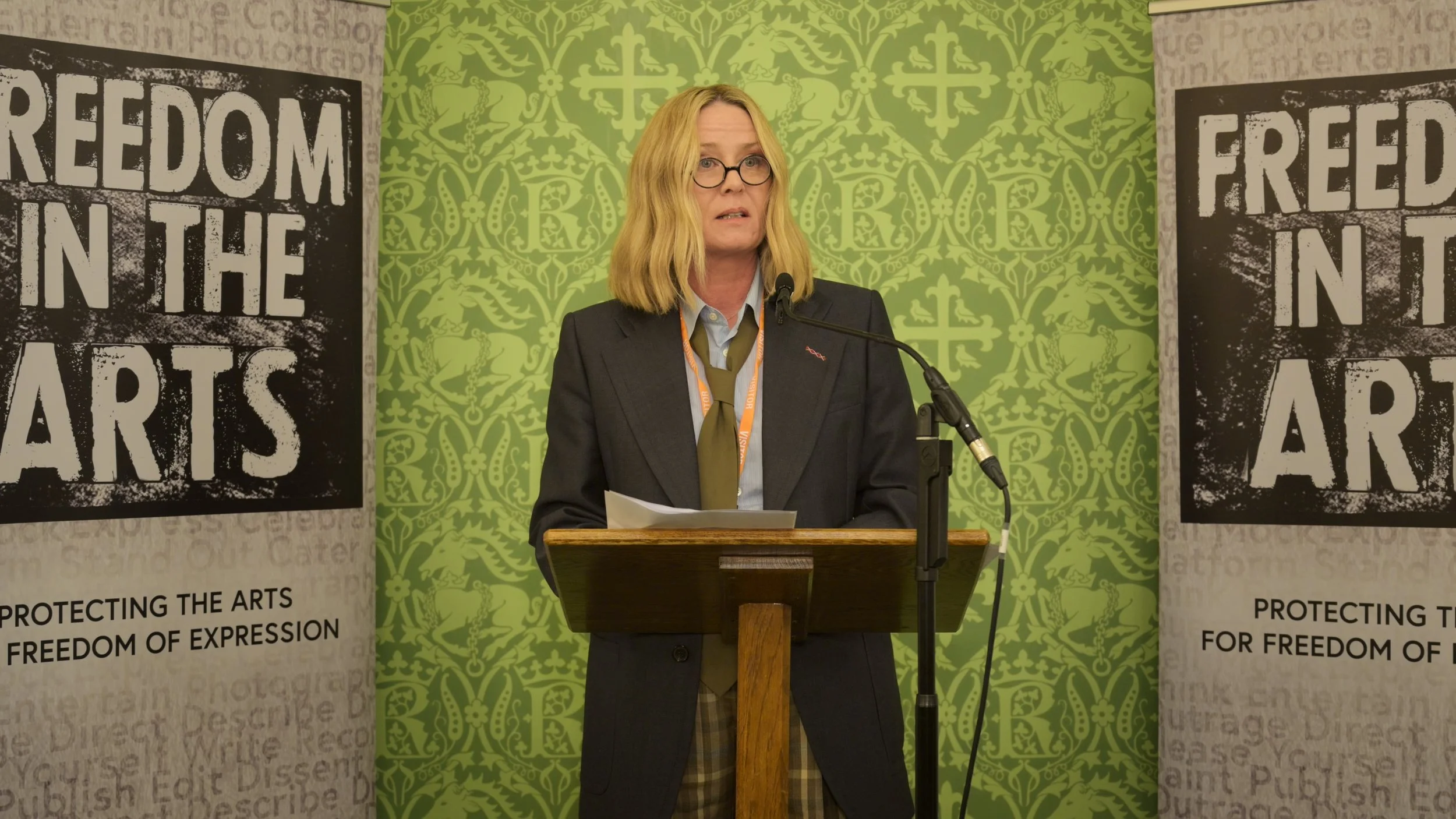
We launched The New Boycott Crisis in Parliament on 27 April 2026 — keynote from Róisín Murphy, alongside named speeches from sector leaders, parliamentarians, and the two of us. The launch was not a press object on its own; it was the moment we named the crisis in public, on the record, in front of the people the sector reports to. We are prosecuting the analysis in the rooms it needs to land in — not only publishing it.
Read the speeches →